6 Critical Steps for Preparing a Site for a New Fruit Hedge
The first squeeze of raw clay between your fingers tells you everything. If it rolls into a slick ribbon that holds its shape, you're dealing with drainage problems before a single root touches ground. If it crumbles like spent coffee grounds, you're halfway to success. Learning how to prepare a site for a new fruit hedge starts with this tactile assessment, long before catalogs arrive or bare-root bundles get ordered. The difference between a hedge that limps through three seasons and one that produces for 20 years lies entirely in the preparation work done while the ground is still empty.
Most failures happen because gardeners treat site prep like a weekend project instead of a six-month campaign. Fruit hedges demand what annual vegetables never do: permanent root systems that will occupy the same cubic feet of soil for decades. That permanence means getting the foundation right, or living with the consequences until you're ready to rip everything out and start over.
Materials and Supplies
Soil Testing and Amendment
A complete soil test kit measuring pH, nitrogen (N), phosphorus (P), potassium (K), calcium, magnesium, and organic matter percentage. Target pH for most fruit hedges sits between 6.0 and 6.8. Elemental sulfur lowers pH at roughly 1 pound per 100 square feet to drop one full point in loam soils. Lime raises pH, with dolomitic lime adding magnesium simultaneously.
Compost in quantities of 2 to 4 cubic yards per 100 square feet, fully finished and screened. Raw manure burns roots; compost aged at least six months transforms nitrogen into stable forms. Balanced organic fertilizer rated 5-10-5 or 4-6-4 provides starter nutrition without the salt burn of synthetic blends.
Physical Barriers and Structures
Landscape fabric rated for 10-year durability, not the flimsy stuff that shreds in two seasons. Woven polypropylene breathes while blocking light. Hardware cloth with quarter-inch mesh stops voles and gophers from below. T-posts or wooden stakes every 8 feet establish the drip line for mulch zones.
Irrigation Components
Drip tape with 12-inch emitter spacing delivers water directly to root zones. A backflow preventer, pressure regulator (15 PSI for drip systems), and filter prevent clogging. Polyethylene tubing in half-inch diameter connects zones. Figure 1 gallon per hour per plant for establishment phase.
Timing and Growing Schedule
Hardiness Zones 4 through 9 support the widest range of fruit hedge species. Zone 4 gardeners focus on hardy selections like Amelanchier (serviceberry), Prunus americana (American plum), and Ribes (currants). Zone 9 gardeners succeed with Feijoa sellowiana (pineapple guava) and thornless blackberries.
Site preparation begins a full season before planting. For spring installations (March through May depending on zone), start soil work the previous August. Fall plantings (October through November) require summer preparation starting in May.
Mycorrhizal fungi colonization takes 90 to 120 days to establish beneficial networks. These symbiotic relationships increase phosphorus uptake by 300% compared to uninoculated roots. Till in mycorrhizal inoculant during initial soil preparation, not at planting time when disruption is highest.
Days to first harvest varies wildly. Raspberries produce year two. Currants and gooseberries bear lightly in year two, heavily by year three. Aronia and elderberry hit stride in year four. Plan for a three-year establishment window before expecting meaningful yields.
Step-by-Step Instructions
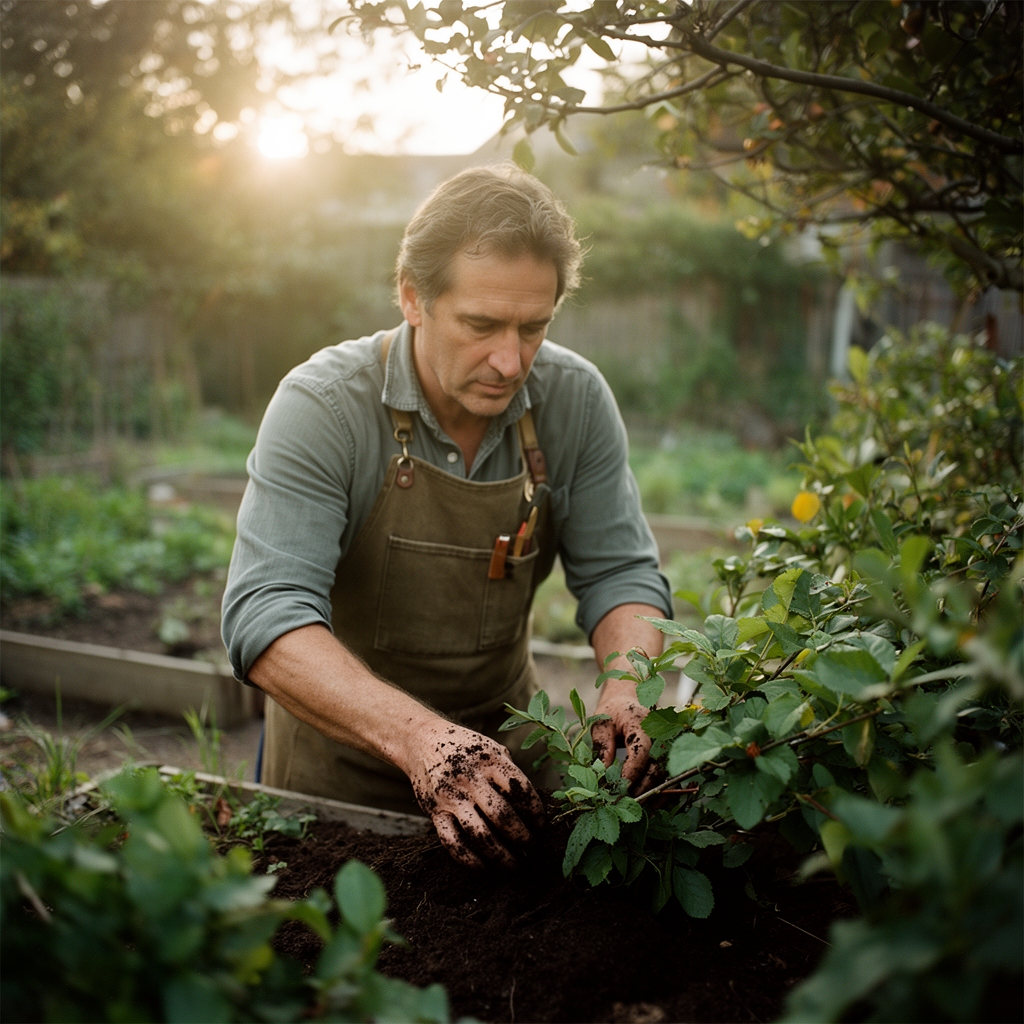
Phase 1: Site Assessment and Clearing
Walk the proposed hedge line at three different times of day. Morning, midday, and late afternoon sun angles reveal shade patterns that dictate plant selection. Fruit hedges need six hours minimum of direct sun; eight hours optimizes production.
Flag existing tree roots, underground utilities, and drainage channels. Call 811 for utility location before any digging begins. Remove all perennial weeds by hand or with targeted herbicide applications 30 days before soil work. Quackgrass, bindweed, and Canada thistle will strangle young hedge plants if left to resprout.
Pro-Tip: Wet the site thoroughly 24 hours before assessment. Puddles that remain after 6 hours mark drainage problem zones requiring subsurface correction or raised bed strategies.
Phase 2: Soil Modification
Broadfork or rototill to 12-inch depth across the entire planting strip, working in a band 4 feet wide. Narrow strips concentrate roots and competition. Wide bands encourage lateral root expansion and wind stability.
Incorporate compost and balanced organic fertilizer simultaneously. Broadcasting amendments on the surface, then tilling in, distributes nutrition evenly. Blend, don't layer. Layered soils create interface barriers where roots stall.
Install hardware cloth if rodent pressure is known. Dig trenches 18 inches deep along hedge perimeters, line with quarter-inch mesh, backfill. This underground fence stops tunneling rodents without chemicals or traps.
Pro-Tip: Add biochar at 5% by volume during soil modification. This stable carbon source holds nutrients against leaching, houses beneficial bacteria, and persists for centuries. One application serves the entire life of the hedge.
Phase 3: Final Grading and Mulching
Rake the prepared bed to remove rocks larger than a golf ball and create a level surface with gentle drainage away from structures. Install drip irrigation with emitters positioned where root balls will sit.
Apply 4 inches of ramial wood chips (young branch material under 3 inches diameter) as mulch. Ramial chips decompose into humus-rich soil while feeding lignin-degrading fungi that partner with fruit plants. Keep mulch 6 inches clear of eventual trunk positions to prevent crown rot.
Mark final plant spacing with stakes and bright flagging. Spacing depends on species: raspberries at 24 inches, currants at 36 inches, larger shrubs like aronia at 48 to 60 inches.
Pro-Tip: Water the prepared bed weekly for four weeks before planting even though nothing is growing yet. This "pre-wetting" activates soil biology, settles amendments, and reveals drainage issues while fixes are still easy.
Phase 4: Establishing Plants
Soak bare-root plants in water with added kelp extract for 2 to 4 hours before installation. Kelp provides growth hormones and trace minerals that kickstart root development. Container plants get watered thoroughly in their pots, then knocked out gently to inspect root systems.
Dig planting holes twice the width of root balls but no deeper. Planting too deep suffocates roots and invites disease. The root crown should sit at grade or very slightly above.
Backfill with native soil only, no amendments in the hole. Amended planting holes create "pot" effects where roots circle instead of spreading into surrounding soil. Amendments belong in the broad preparation zone, not the hole.
Water each plant with 3 gallons immediately after installation, then again 48 hours later. This double watering eliminates air pockets and ensures root-to-soil contact.
Pro-Tip: Prune away one-third of the top growth on bare-root plants at installation. This balancing act matches reduced root mass to reduced transpiration demand, preventing transplant shock and dieback.
Nutritional and Environmental Benefits
Fruit hedges function as edge habitat, the most biodiverse zone in any landscape. Mason bees, predatory wasps, and lacewings nest in the structure while feeding on early blooms. A 50-foot hedge provides habitat equivalent to 200 square feet of wildflower meadow.
Currants contain anthocyanins at levels rivaling blueberries. Aronia berries pack 1,480 mg of anthocyanins per 100 grams, the highest of any temperate fruit. Elderberries deliver immune-supporting compounds used in commercial cold remedies. Serviceberries provide fiber, iron, and manganese.
Root systems stabilize slopes and filter runoff. The dense, fibrous root networks of hedge plants trap sediment and excess nutrients before they reach waterways. Each linear foot of established hedge processes roughly 5 gallons of runoff per rainfall event.
Nitrogen fixation occurs in hedges containing Elaeagnus species (autumn olive, silverberry) and Shepherdia (buffaloberry). These plants host Frankia bacteria in root nodules, pulling atmospheric nitrogen into soil and sharing it with neighboring plants through mycorrhizal networks.
Advanced Methods
Small Space Strategies
Espalier techniques train fruit hedges against fences or walls, reducing depth requirements from 4 feet to 18 inches. Two-dimensional hedges produce at 70% of freestanding yields while occupying one-fourth the ground space. Use horizontal wires spaced 12 inches apart, training lateral branches along each wire.
Belgian fence patterns create diamond lattices from angled cordons, maximizing edge exposure (where fruiting concentrates) while minimizing footprint. Each plant angles at 45 degrees, creating a self-supporting structure when properly wired.
Permaculture Integration
Guild planting places nitrogen-fixing groundcovers like Trifolium repens (white clover) under fruit hedges. Clover feeds the hedge, suppresses weeds, and hosts beneficial insects. Mow clover three times per season, leaving clippings as green manure mulch.
Companion planting with Allium species (chives, garlic) between hedge plants deters aphids and provides early spring greens. Comfrey planted every 6 feet accumulates minerals from deep soil layers; cut foliage becomes potassium-rich mulch.
Season Extension
Row covers supported on hoops extend harvest on raspberries and blackberries by 2 to 3 weeks in fall. Covers trap heat while allowing rain and 70% light transmission. Remove covers when daytime temperatures exceed 80°F to prevent heat stress.
Summer-bearing raspberries can be fooled into fall production by cutting all canes to ground level in April. New canes emerge, flower, and fruit in September through October. This sacrifice eliminates the June/July harvest but concentrates production when less fruit competes for attention.
Troubleshooting
Symptom: Plants show yellowing leaves with green veins (interveinal chlorosis)
Solution: This indicates iron deficiency, common in high pH soils above 7.0. Apply chelated iron as foliar spray for quick response, then address soil pH with elemental sulfur at 1 pound per 100 square feet. Retest pH in 6 months.
Symptom: Stunted growth and purplish leaf tints
Solution: Phosphorus deficiency causes purple discoloration, especially in cold soils below 55°F. Phosphorus becomes unavailable in cold conditions even when present. Apply bone meal (0-12-0) at 2 pounds per plant and wait for soil warming. Black plastic mulch raises soil temperature 8 to 10 degrees.
Symptom: Vigorous growth but no flowers or fruit
Solution: Excess nitrogen from overfertilization creates vegetative growth at the expense of reproduction. Cease all nitrogen applications for one full season. Top-dress with 0-10-10 fertilizer to provide phosphorus and potassium without nitrogen.
Symptom: Wilting despite adequate soil moisture
Solution: Root rot from Phytophthora or Pythium fungi attacks waterlogged roots. Improve drainage by creating berms or raised beds 8 to 12 inches high. Remove and destroy infected plants; do not compost. Drench surrounding soil with Trichoderma biological fungicide.
Symptom: Leaves with irregular holes and skeletonized portions
Solution: Japanese beetle feeding creates this distinctive damage pattern. Handpick beetles into soapy water early morning when they're sluggish. Apply Bacillus thuringiensis galleriae (BtG) to soil in fall to target beetle grubs. Avoid pheromone traps that attract more beetles than they catch.
Storage and Maintenance
Irrigation Requirements
Established fruit hedges need 1 to 1.5 inches of water per week during growing season, delivered in one deep soaking rather than frequent shallow sprinkles. Deep watering trains roots downward into moisture-stable soil layers. Shallow watering creates surface roots vulnerable to heat stress.
Run drip irrigation for 4 to 6 hours once weekly, or until moisture reaches 12 inches deep. Check depth by probing with a screwdriver; it should slide easily through moistened soil.
Reduce watering by half in September to harden off plants before dormancy. Cease watering after leaf drop except during abnormally dry winters when monthly deep watering prevents desiccation damage.
Feeding Schedule
Apply balanced organic fertilizer (5-5-5 or similar) in early spring as buds swell. Use 1 cup per mature plant scattered in a ring at the drip line, not touching stems. Side-dress with compost in June, applying a 1-inch layer over the root zone.
Fall feeding with low-nitrogen, high-potassium fertilizer (2-5-10) hardens canes and increases cold tolerance. Apply 6 weeks before average first frost date.
Annual Maintenance Tasks
Prune summer-bearing raspberries immediately after harvest, removing all canes that fruited. These biennial canes die anyway; removing them redirects energy to next year's fruiting canes. Fall-bearing types get cut to ground level in late winter.
Currants and gooseberries fruit on 2 and 3-year-old wood. Remove canes older than 3 years each winter to maintain productive wood without overcrowding.
Refresh mulch annually to maintain 4-inch depth. Decomposition consumes 50% of mulch volume per year. Top-dressing in late fall provides winter insulation and spring weed suppression.
Harvest and Storage
Pick berries in morning after dew dries but before heat builds. Sugar content peaks in morning hours. Most berries store 3 to 7 days refrigerated in shallow containers that prevent crushing.
Freeze excess harvest within 24 hours of picking. Spread berries single-layer on trays, freeze solid, then pack into bags. This "tray freeze" method prevents clumping and allows portion removal.
Conclusion
Success with fruit hedges builds on three non-negotiables: thorough soil preparation addressing drainage and fertility, appropriate species selection for your hardiness zone and site conditions, and patient establishment care through the first three years. The preparation work described here creates conditions where plants thrive rather than merely survive, rewarding your investment with decades of production. Share your hedge progress with local gardening groups or extension offices; your documented experience becomes invaluable data for others planning similar installations.
Expert FAQs
What's the minimum hedge length worth installing?
Twenty feet (roughly 6 to 10 plants depending on species) creates enough mass for pest predator habitat and justifies irrigation infrastructure. Shorter installations function more as specimen plants than functional hedges.
Can I prepare a site in spring and plant the same season?
Yes, but expect reduced first-year establishment. Six months between preparation and planting allows soil biology to stabilize and amendments to integrate. Spring prep followed by fall planting works better than same-season installation.
How do I handle existing lawn when converting to hedge?
Smother lawn with cardboard covered by 6 inches of compost 4 months before planting. This sheet mulching kills grass without tilling (which spreads grass rhizomes) while building soil. Pull back mulch at planting time to install plants, then replace around them.
Should fruit hedges go on the north or south side of a garden?
South sides maximize sun exposure for the hedge but cast shade on areas behind them. North placement puts the hedge in shade from other structures but keeps garden areas sunny. Choose based on whether hedge production or garden space takes priority.
What's the best species for a beginner's first fruit hedge?
Red or yellow raspberries combine easy establishment, quick production (year two), simple pruning, and high yields. They tolerate average soil, handle cold through Zone 3, and produce without cross-pollination requirements. Start with raspberries, expand to other species as confidence builds.