6 Staking Steps for Fixing a Leaning Indoor Plant
A potted fiddle-leaf fig leans toward the western window, its crown heavy and unbalanced after months of phototropic growth. The ceramic pot wobbles on the sill. The soil surface shows a network of surface roots exposed from repeated tipping. These steps for fixing a leaning indoor plant address both the immediate structural failure and the long-term gravitropic response that caused it.
Materials
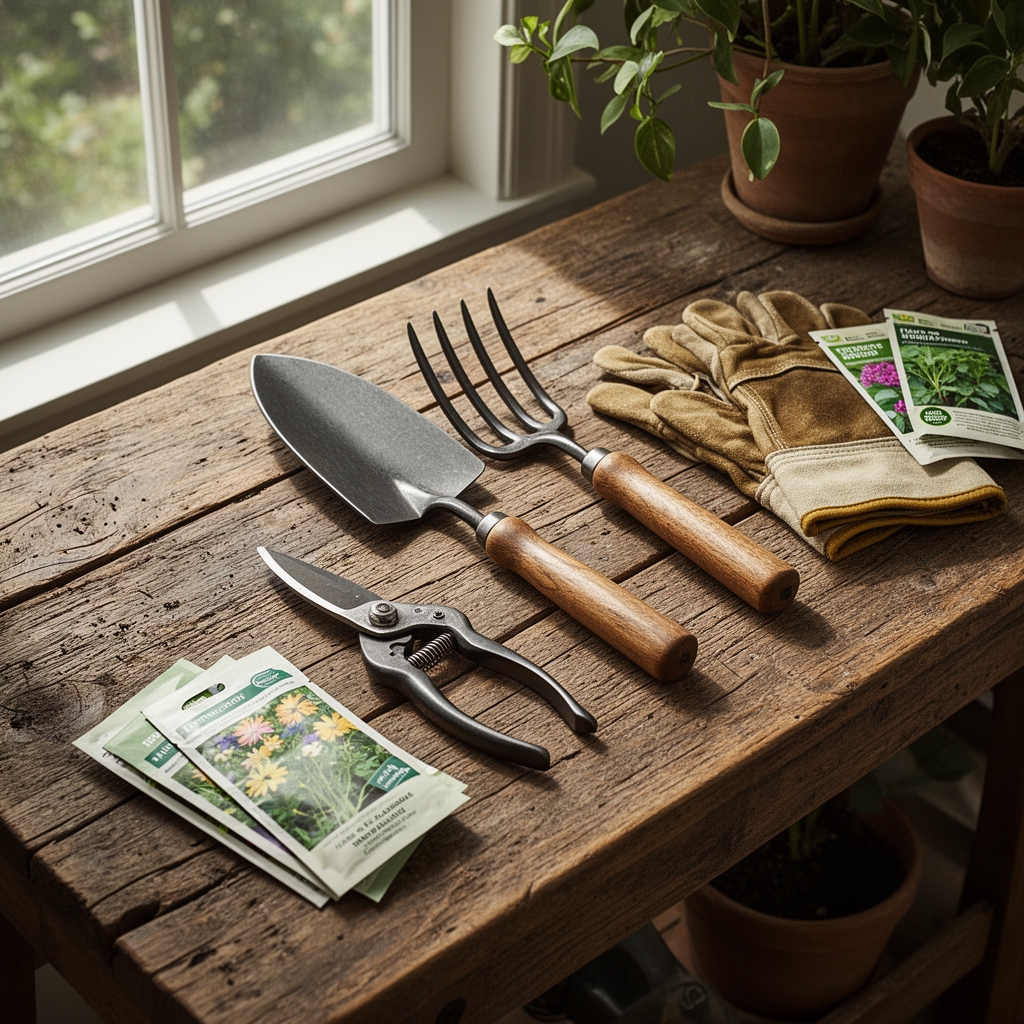
Gather bamboo stakes or wooden dowels in 1/2-inch diameter, cut 2 inches taller than the current plant height. Purchase soft cloth ties or stretchy plant tape, never wire or rigid string that girdles cambium tissue. Select a balanced liquid fertilizer at 3-3-3 NPK ratio for post-staking recovery, diluted to half strength. A pH meter calibrated to 6.0-7.0 range confirms substrate conditions for optimal nutrient uptake.
Acquire fresh potting medium with a cation exchange capacity above 20 meq/100g if transplanting becomes necessary. The medium should contain perlite or pumice at 30% volume for drainage. Mycorrhizal fungi inoculant in powder form colonizes root zones within 14 days when mixed into backfill at 1 tablespoon per gallon of soil.
Timing
Indoor interventions occur year-round, but spring growth from March through May in USDA Hardiness Zones 3-9 offers the fastest recovery window. Auxin distribution peaks during active growth, accelerating the plant's ability to reorient vascular tissue. Avoid staking during winter dormancy between November and February when metabolic rates drop by 40% in temperate-origin houseplants.
For tropical species like Monstera or Philodendron, any month works if indoor temperatures remain between 65-75°F and relative humidity exceeds 50%. Check soil temperature with a probe thermometer. Root activity ceases below 55°F.
Phases
Step 1: Assessment
Inspect the root ball by gently tipping the pot and sliding the plant free. Circle roots indicate pot-bound conditions requiring a container one size larger. Brown, mushy roots signal Pythium or Phytophthora root rot, which demands immediate pruning of affected tissue with sterilized shears.
Pro-Tip: Measure the lean angle with a protractor app. Angles beyond 25 degrees from vertical require immediate intervention to prevent permanent xylem deformation.

Step 2: Stake Placement
Insert two stakes opposite each other, 2 inches from the main stem at 180-degree spacing. Drive stakes to pot bottom, penetrating 3-4 inches into the root ball without severing major structural roots. Three-stake systems provide superior stability for plants over 4 feet tall or those with asymmetric canopies.
Pro-Tip: Angle stakes at 15 degrees outward from vertical to create a wider support base and reduce torque on the stem during adjustment.
Step 3: Attachment
Tie the stem to stakes at three height intervals using figure-eight loops. The figure-eight creates a buffer zone between stake and stem, preventing bark abrasion and allowing diameter expansion. Start ties snug but not tight. Check weekly and loosen as needed during the recovery phase.
Pro-Tip: Position the lowest tie 6 inches above soil level where lignification is most complete, reducing stress concentration at the stem base.
Step 4: Gradual Correction
Adjust ties every 72 hours, moving the stem 5-10 degrees closer to vertical with each adjustment. Rapid correction cracks vascular bundles and interrupts water transport. Monitor leaf turgor daily during this phase. Wilting indicates excessive mechanical stress.
Step 5: Root Ball Stabilization
Add fresh potting medium to fill voids created during stake insertion. Tamp gently to eliminate air pockets that desiccate fine root hairs. Water thoroughly until drainage emerges from pot bottom, settling the substrate around repositioned roots.
Pro-Tip: Mix 1 tablespoon of slow-release 5-5-5 granular fertilizer into the top 2 inches of soil to support new root growth over the next 90 days.
Step 6: Canopy Rebalancing
Prune branches on the leaning side by 20-30% to reduce weight load. Make cuts at 45-degree angles just above outward-facing nodes to encourage lateral growth. Sterilize pruners with 70% isopropyl alcohol between cuts.
Pro-Tip: Rotate the plant 90 degrees weekly after staking to distribute auxin evenly and prevent renewed phototropic lean.
Troubleshooting
Symptom: Yellowing leaves post-staking.
Solution: Reduce watering frequency by 30%. Staking temporarily impairs root hydraulic conductivity during the 7-10 day adjustment period.
Symptom: Stem develops brown lesions at tie points.
Solution: Loosen all ties immediately and add foam padding between stem and stake. Lesions indicate tie girdling that blocks phloem transport.
Symptom: Plant continues leaning despite stakes.
Solution: Inspect for one-sided root loss. Unpot and trim dead roots, then transplant into fresh medium with mycorrhizal inoculant.
Symptom: New growth emerges horizontally.
Solution: Gravitropism requires 21 days to reset. Maintain stakes for minimum 6 weeks while statocytes in stem tissue recalibrate.
Maintenance
Water when the top 2 inches of soil reach dry to the touch, approximately every 7 days for 6-inch pots and every 10 days for 12-inch pots. Apply 1 cup of water per 4 inches of pot diameter. Feed with diluted 3-3-3 liquid fertilizer every 14 days from March through September.
Remove stakes after 8 weeks if the plant stands vertical when ties are loosened during test checks. Continue weekly 90-degree rotations indefinitely. Prune canopy annually in early spring to maintain balanced architecture.
FAQ
How long do stakes remain in place?
Six to ten weeks for herbaceous plants like Pothos, 12-16 weeks for woody specimens like Ficus.
Can I straighten a plant without repotting?
Yes, if roots remain healthy and pot-bound conditions are absent. Stakes alone correct lean in 70% of cases.
What if the main stem cracked during the lean?
Apply grafting wax to cracks over 1/8 inch. Stake immediately to immobilize the injury site for callus formation over 4-6 weeks.
Do all leaning plants need stakes?
No. Vining species like Philodendron scandens naturally climb and require moss poles, not stakes.
Will the plant grow straight after stake removal?
If staked for the full duration and rotated weekly, 85% of plants maintain vertical growth permanently.