8 Powerful Ways to Use a Pickaxe for Hardpan Soil
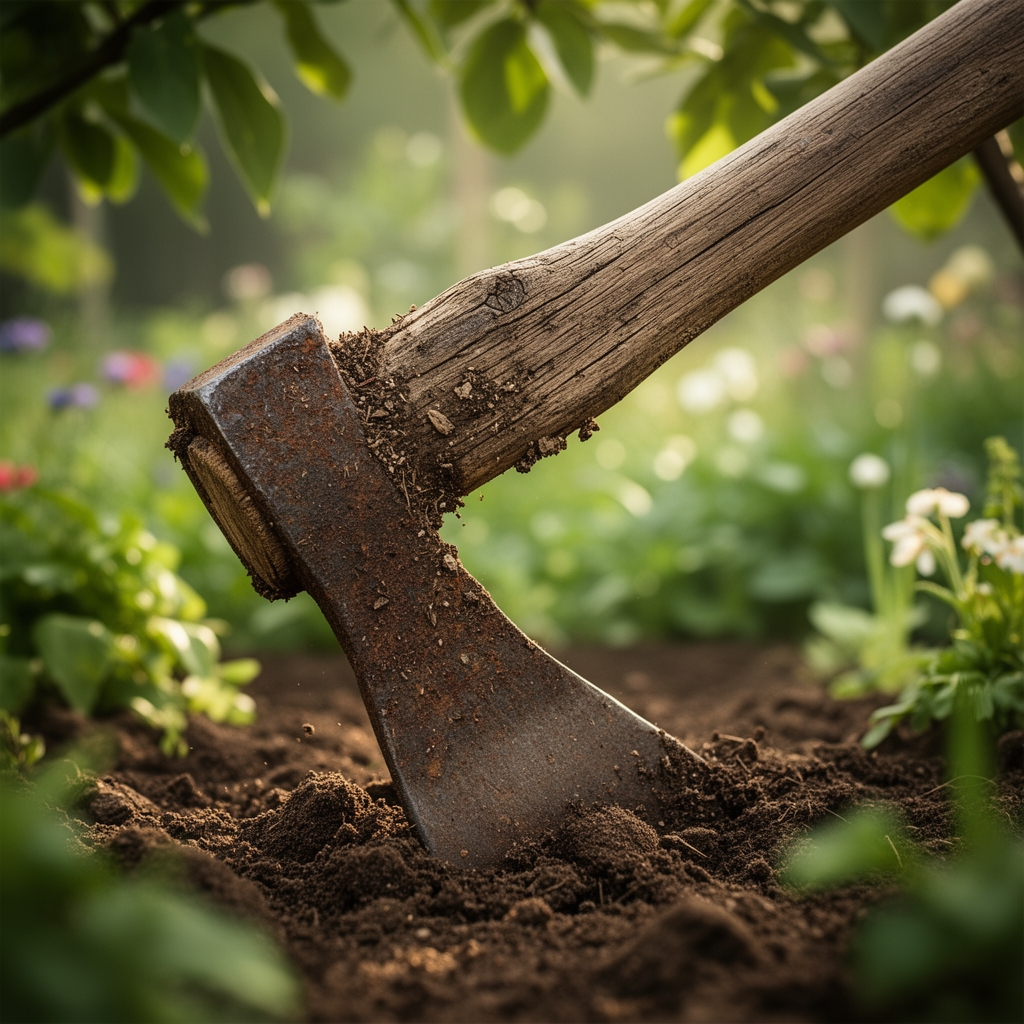
The pickaxe hits compacted soil with a dull thud, not the sharp crack of loose earth. That sound signals hardpan, a cement-like sublayer that starves plant roots of water, oxygen, and nutrients. Using a pickaxe for breaking hardpan in garden plots transforms barren ground into productive cultivation space by fracturing the impermeable barrier that forms 6 to 18 inches below the surface. This dense layer develops when clay particles, iron oxides, and dissolved minerals cement together under years of pressure and poor drainage.
Materials
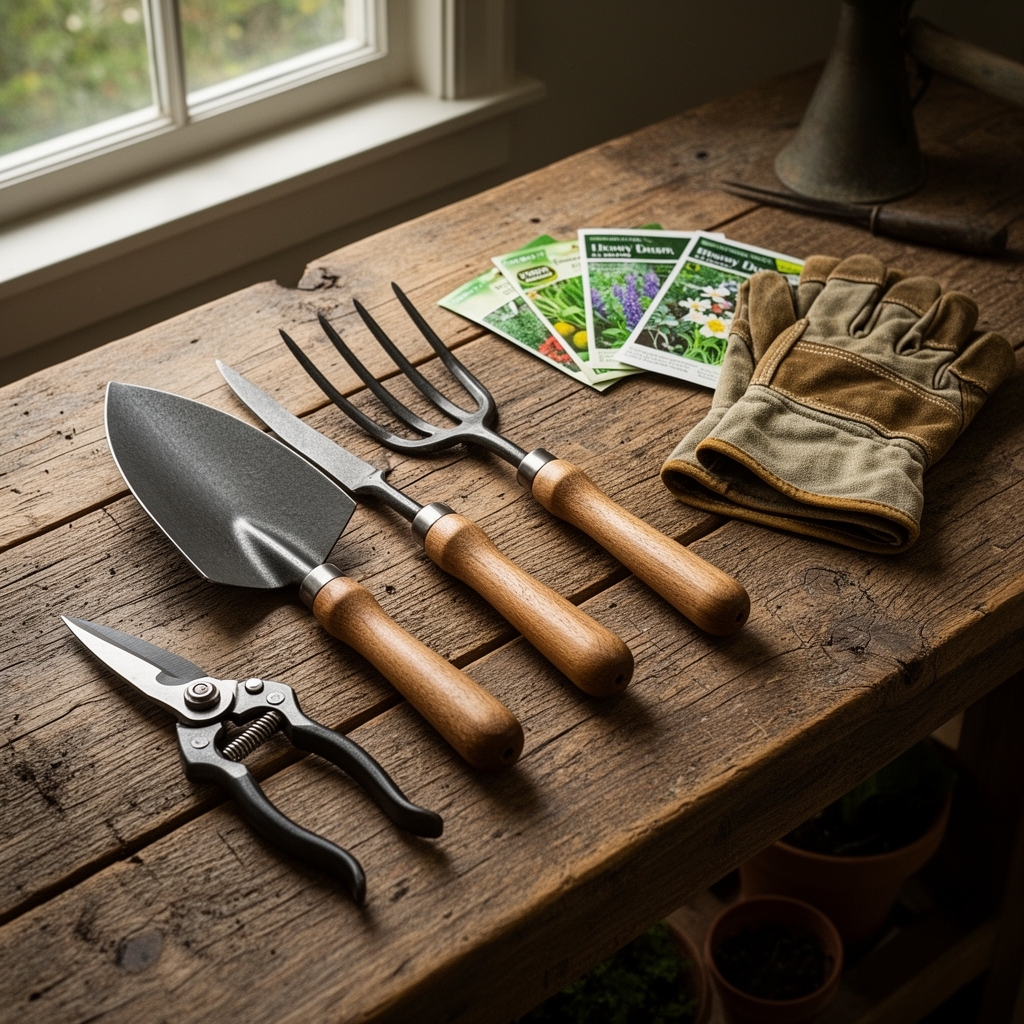
Select a pickaxe weighing 5 to 7 pounds with a 36-inch hickory or fiberglass handle for optimal leverage without fatigue. The pointed end penetrates compacted layers while the chisel end pries fractured chunks loose.
Soil amendments restore structure after mechanical disruption. Compost with an N-P-K ratio of approximately 1-1-1 supplies balanced nutrients and increases cation exchange capacity by 20 to 40 percent. Aged pine bark fines, screened to 0.25-inch diameter, improve drainage in clay-dominant hardpan. Gypsum (calcium sulfate) at 40 pounds per 1,000 square feet flocculates clay particles without altering pH, unlike lime. For acidic hardpan testing below 6.0 pH, incorporate dolomitic limestone at 50 pounds per 1,000 square feet to raise pH by one full point. Alfalfa meal (2.5-0.5-2.5) provides slow-release nitrogen and triacontanol, a natural growth stimulant.
Mycorrhizal inoculant containing Rhizophagus irregularis at 120 propagules per gram colonizes root zones within 14 days. This symbiotic relationship extends effective root surface area by 10 to 100 times, critical in newly opened hardpan zones.
Timing
Break hardpan during late summer or early autumn in Zones 6 through 9 when soil moisture content reaches 15 to 20 percent. At this consistency, the pickaxe fractures layers cleanly without creating fist-sized clods that resist weathering. Avoid working saturated soil; compaction worsens when clay particles smear under pressure.
In Zones 3 through 5, schedule hardpan disruption in late spring, four to six weeks after the final frost date when soil temperature at 6-inch depth reaches 50°F. Winter freeze-thaw cycles naturally fragment pickaxe-loosened hardpan, reducing spring tillage needs by 30 percent.
Arid Zone 10 and 11 gardeners should break hardpan in November through February when seasonal rains soften layers and ambient temperatures below 75°F reduce physical strain.
Phases

Breaking Phase
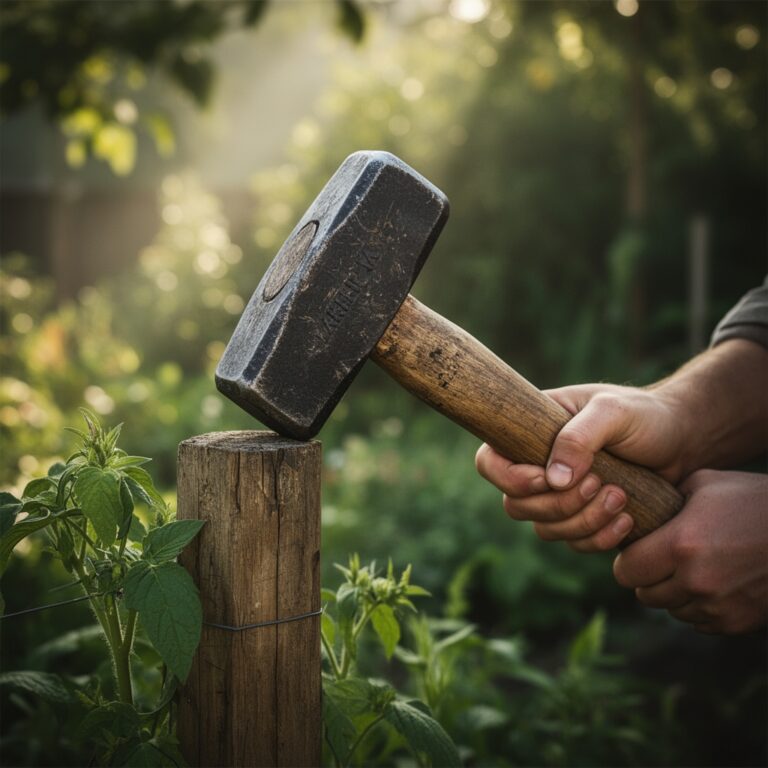
Mark a grid with stakes at 18-inch intervals across the planting bed. Drive the pickaxe point downward at a 60-degree angle until resistance changes from solid to fractured, typically 8 to 14 inches deep. Strike each grid point three times, rotating 120 degrees between blows to create radial fractures. Lever the chisel end horizontally to propagate cracks outward 6 to 10 inches from each impact point.
Pro-Tip: Spray Rhodamine WT dye tracer at 5 milliliters per gallon across broken sections. Return after 48 hours; dye penetration below 12 inches confirms successful fracturing.
Amendment Phase
Spread 3 inches of compost across fractured hardpan. Add gypsum or limestone based on soil test results. Broadcast mycorrhizal inoculant at 2 ounces per 100 square feet immediately before covering with amendments. Fungal hyphae desiccate within 30 minutes of UV exposure.
Work amendments into the top 6 inches using a digging fork, not a rototiller. Mechanical blades re-compact disturbed hardpan and sever establishing fungal networks.
Pro-Tip: Insert 0.5-inch diameter holes 24 inches deep at 24-inch spacing using a soil auger. These channels guide roots through residual hardpan and accelerate deep drainage establishment.
Planting Phase
Allow amended soil to settle for 14 days before transplanting. Deep-rooted perennials like comfrey (Symphytum officinale) and daikon radish (Raphanus sativus var. longipinnatus) extend 36 to 48 inches into fractured zones, maintaining open channels through auxin-stimulated radial root expansion.
Plant nitrogen-fixing legumes such as hairy vetch (Vicia villosa) immediately after amendment. Rhizobium bacteria nodules fix 100 to 150 pounds of nitrogen per acre annually while root exudates produce glomalin, a glycoprotein that permanently improves soil aggregation.
Pro-Tip: Position transplants directly above pickaxe strike points where fracture density peaks, ensuring roots encounter maximum loosened soil volume.
Troubleshooting
Symptom: Water pools 24 hours after irrigation despite pickaxe work.
Solution: Hardpan remains continuous beneath fractured zones. Extend breaking depth by 4 inches and install French drains at bed perimeter sloped 1 inch per 8 feet.
Symptom: Plant growth improves initially but stunts after 60 days.
Solution: Fractured hardpan re-compacts under irrigation weight. Maintain permanent mulch layer 4 inches deep to buffer raindrop impact energy exceeding 20 joules per square meter.
Symptom: Amendments vanish into deep fractures without improving topsoil structure.
Solution: Install landscape fabric 12 inches deep across broken hardpan before adding amendments. Remove fabric after 90 days once root mats stabilize architecture.
Symptom: Pickaxe bounces off surface without penetrating.
Solution: Irrigate area with 2 inches of water. Wait 18 hours for moisture to soften clay bonds before resuming work.
Maintenance
Apply 1 inch of water weekly during establishment year, measured with rain gauges placed at four corners of treated beds. Deep, infrequent irrigation trains roots to exploit fractured hardpan rather than clustering near the surface.
Top-dress beds with 0.5 inch of compost each spring. Earthworm populations increase by 200 to 400 percent in amended hardpan within two years, creating permanent macropores through continuous burrowing.
Avoid foot traffic across treated beds. Human footsteps apply 25 psi of pressure, sufficient to re-form hardpan in weakly aggregated soil.
FAQ
How deep does hardpan typically form?
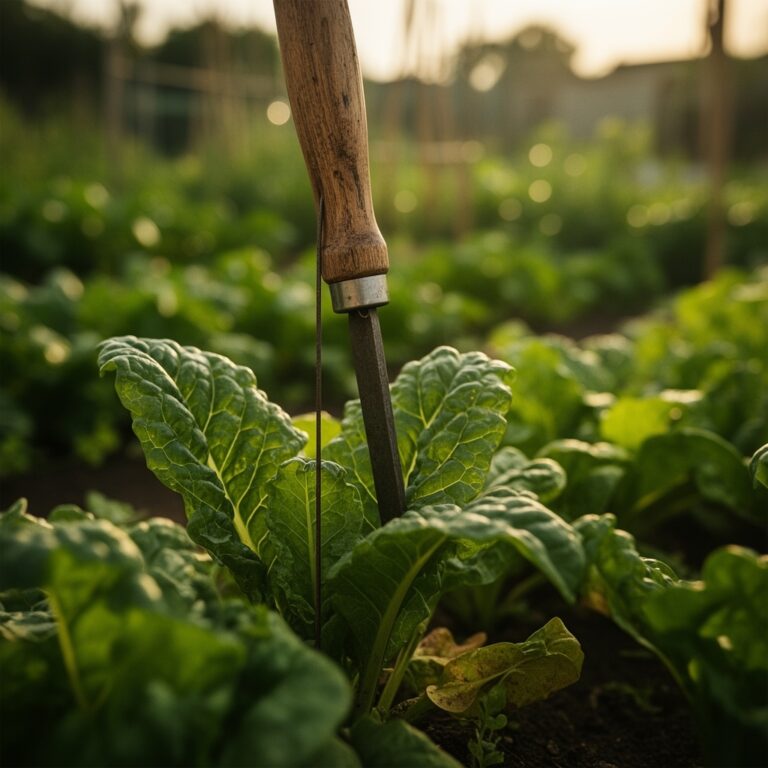
Most hardpan develops between 6 and 18 inches deep where equipment weight, foot traffic, or natural clay migration concentrate. Probe with a steel rod to locate the exact depth before beginning pickaxe work.
Can I use power equipment instead of a pickaxe?
Jackhammers fracture hardpan efficiently but pulverize soil structure, reducing pore space by 35 percent. Pickaxes preserve aggregate integrity while requiring 4 to 6 hours per 100 square feet.
Will broken hardpan re-form?
Without organic matter and living roots, hardpan reforms within 18 to 36 months. Maintain 5 percent soil organic matter through annual compost applications and continuous cover cropping.
Do I need to break hardpan across entire garden?
No. Fracture only planting rows or individual tree wells. Roots navigate around intact hardpan sections if provided access channels every 24 inches.
What if hardpan exists below 18 inches?
Layers deeper than 18 inches require professional subsoiling equipment or raised bed construction. Most food crops root effectively in the top 24 inches when shallower hardpan is eliminated.