9 Special Steps to Prepare a Carnivorous Plant Bog Pot
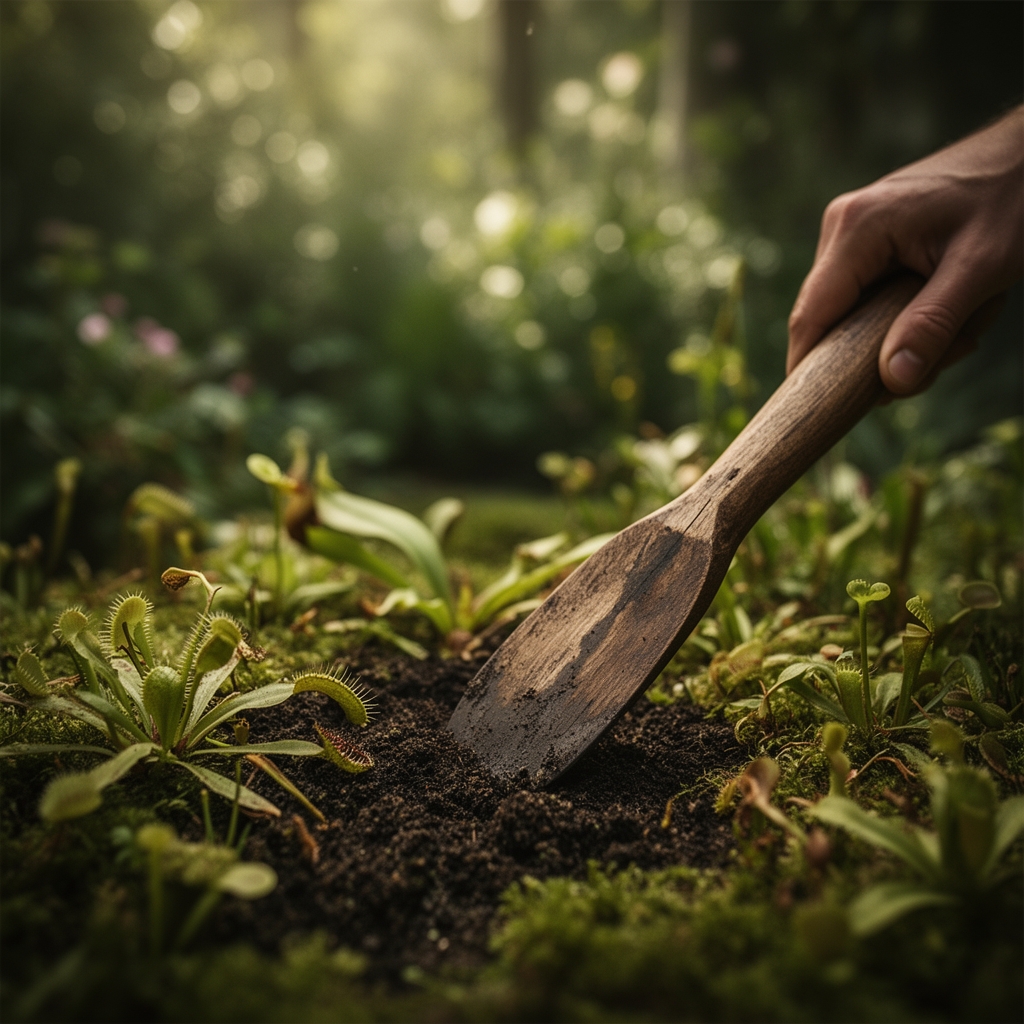
Learning how to prepare a carnivorous plant bog pot begins with understanding that these acid-loving hunters evolved in nutrient-poor wetlands where conventional potting soil would kill them within weeks. The substrate must mimic the low-pH, high-aeration environment of a sphagnum bog while providing stable moisture and zero fertilizer salts. A proper bog pot transforms a standard container into a self-sustaining ecosystem where pitcher plants, sundews, and Venus flytraps can trap insects, dissolve prey with enzymes, and thrive for decades without soil amendments.
Materials and Substrate Chemistry
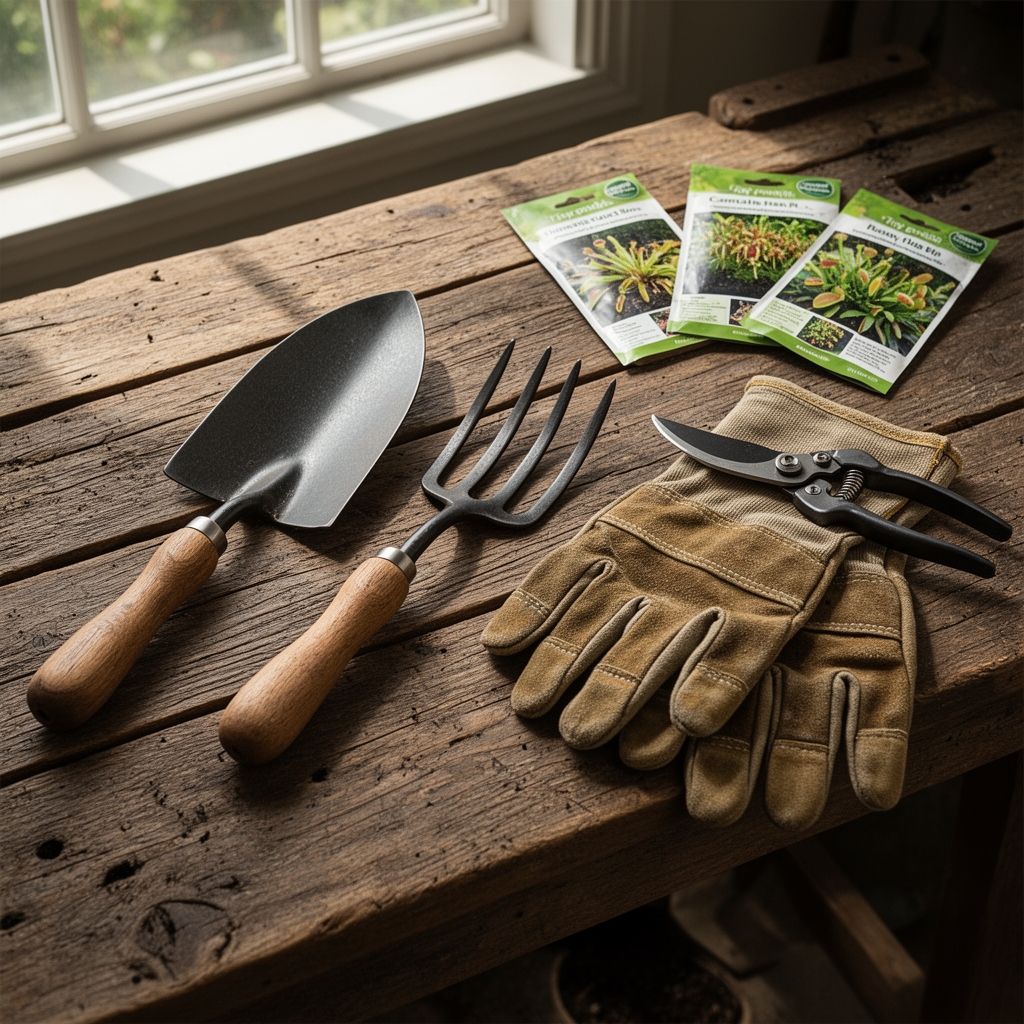
The foundation requires long-fiber sphagnum peat moss (pH 3.5-4.5) mixed with coarse silica sand or perlite at a 1:1 ratio by volume. Avoid horticultural perlite containing fertilizer additives. The cation exchange capacity of pure peat sits near 100-150 meq/100g, but carnivorous plants require minimal nutrient retention. Perlite grade #3 (coarse) provides the necessary air pockets while preventing anaerobic conditions.
Select a non-porous plastic or glazed ceramic pot 8-12 inches deep with no drainage holes. Carnivorous plants demand constant moisture saturation at root level. The container will hold a standing water reservoir 1-2 inches deep at all times.
Optional amendments include milled sphagnum moss for the top 2 inches to increase surface acidity and reduce algae growth. Never add compost, worm castings, or any material with an NPK rating above 0-0-0. These plants obtain nitrogen from insect prey, not soil. Even dilute fertilizer with ratios like 4-4-4 will burn roots and trigger chlorosis.
Use only distilled water, reverse osmosis water, or rainwater with total dissolved solids below 50 ppm. Tap water contains calcium, chlorine, and fluoride that accumulate as toxic salts in bog substrates.
Timing and Climate Windows
Prepare bog pots in early spring 2-4 weeks before the last frost date for your hardiness zone. Zones 3-6 should target late April to mid-May. Zones 7-9 can begin in March. This schedule allows root establishment before summer heat stress.
Most carnivorous species enter dormancy below 50°F. If assembling a bog pot in fall, complete the process 6-8 weeks before first frost to allow root anchoring before winter. Sarracenia and Dionaea require 3-4 months of cold stratification at 35-45°F to trigger proper spring growth.
Assembly Phases
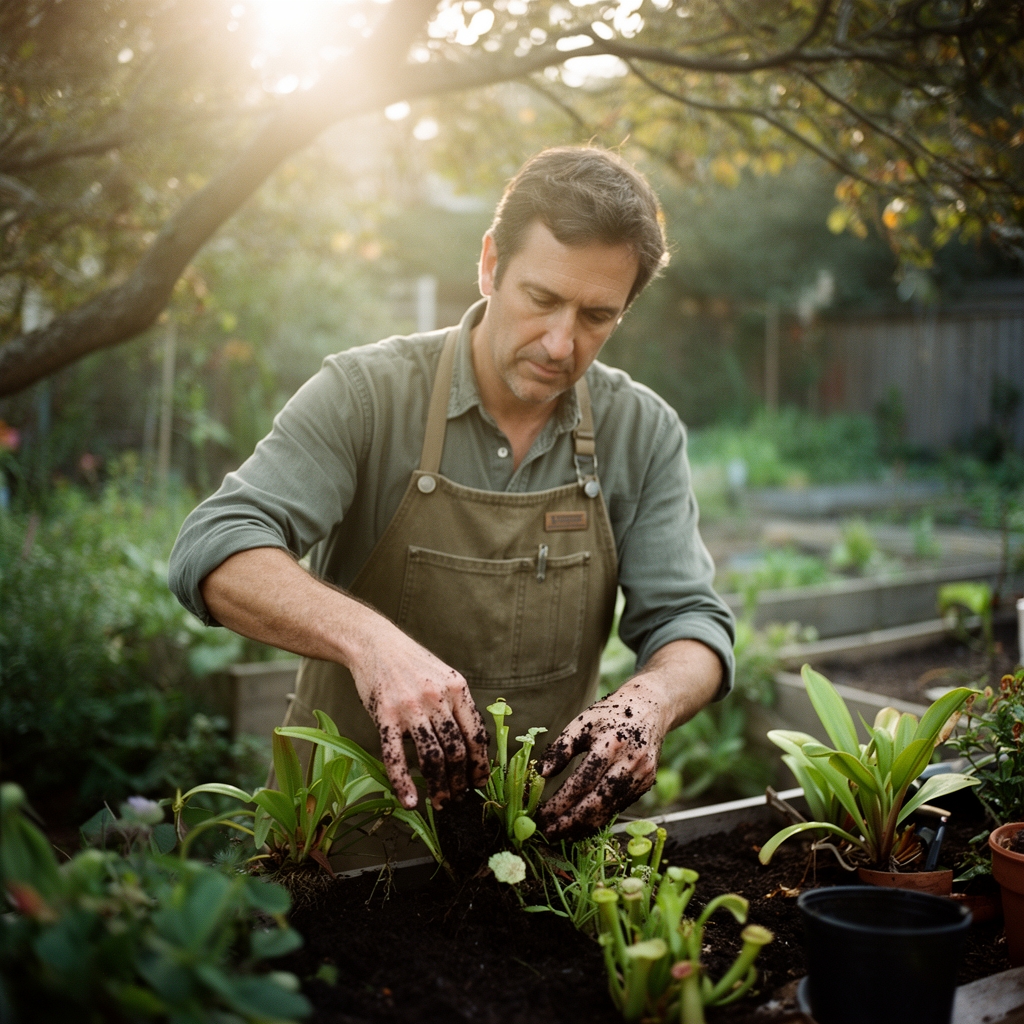
Sowing Phase
Hydrate peat moss 24 hours before mixing. Pour peat into a large tub and add distilled water until fully saturated. Squeeze excess water until the peat feels like a wrung-out sponge. Combine peat and perlite thoroughly in a 1:1 ratio.
Fill the container to within 3 inches of the rim. Tamp gently to eliminate large air pockets but preserve pore space. The substrate should resist compression when pressed.
Pro-Tip: Add 1 tablespoon of finely chopped live sphagnum moss per gallon of substrate. The moss will colonize the surface within 8-12 weeks, creating a living pH buffer and outcompeting algae.
Transplanting Phase
Remove nursery plants from their original containers and rinse roots gently under distilled water to remove any residual fertilizer salts. Trim dead or blackened roots at a 45-degree angle with sterilized pruners.
Create planting pockets 4-6 inches apart. For Sarracenia (North American pitcher plants), position the rhizome horizontally 1 inch below the surface. Dionaea (Venus flytrap) should sit with the white bulb at soil level. Drosera (sundews) prefer shallow planting with roots just covered.
Firm substrate around roots to eliminate air gaps. Surface tension in the peat will draw water upward to new roots.
Pro-Tip: Dust root zones with mycorrhizal fungi inoculum formulated for ericaceous plants. While carnivorous plants do not form traditional mycorrhizae, certain Serendipita species enhance phosphorus uptake without triggering fertilizer burn.
Establishing Phase
Add distilled water until a standing reservoir 1-2 inches deep forms at the bottom. The substrate will wick moisture upward through capillary action. Check moisture levels by inserting a finger 3 inches deep. The substrate should feel continuously damp but not waterlogged at mid-depth.
Place the bog pot in full sun for 6-8 hours daily. Insufficient light causes etiolation and weak trap formation. South-facing exposure works best in Zones 3-7. Zones 8-10 may require afternoon shade to prevent substrate overheating above 90°F.
Pro-Tip: Monitor auxin distribution by observing new pitcher or leaf orientation. Pitchers leaning more than 30 degrees from vertical indicate uneven light. Rotate the pot 90 degrees weekly for the first month to promote symmetrical growth.
Troubleshooting Common Disorders
Symptom: Yellow or red leaves with brown, crispy tips. Solution: Total dissolved solids in water exceed tolerance. Flush substrate with 2 gallons of distilled water per gallon of pot volume. Replace water reservoir completely.
Symptom: Black, mushy rhizomes with foul odor. Solution: Anaerobic conditions from poor aeration. Remove affected plants, increase perlite ratio to 60%, and ensure water level never exceeds 2 inches.
Symptom: Fuzzy gray mold on new growth. Solution: Botrytis cinerea thrives in high humidity with poor air circulation. Remove infected tissue at a 60-degree angle below visible damage. Increase spacing between plants to 6-8 inches. Apply sulfur dust at 1 teaspoon per square foot.
Symptom: Tiny green aphids clustered on traps and buds. Solution: Rinse with distilled water spray. Introduce Aphidoletes aphidimyza larvae at 5 per plant. Avoid insecticidal soap, which damages sensitive traps.
Symptom: Traps fail to close or digest prey. Solution: Insufficient light reduces ATP production for trap mechanism. Move to location with 8+ hours direct sun. Expect 2-3 weeks for recovery.
Maintenance Schedule
Maintain water reservoir at 1-2 inches depth year-round. During active growth (April through September), check levels every 2-3 days. In winter dormancy, monitor weekly.
Remove dead pitchers and leaves monthly by cutting at the base with sterilized scissors at a 45-degree angle. Dead tissue harbors fungal spores.
Never fertilize. The plants obtain nitrogen, phosphorus, and trace minerals from insect prey. A healthy bog pot will capture 5-10 insects per pitcher weekly.
Repot every 3-4 years in early spring. Substrate breaks down over time, reducing aeration and increasing pH. Divide overcrowded rhizomes by cutting sections with at least three growth points.
Frequently Asked Questions
Can I use tap water if it sits out for 24 hours? No. Evaporation removes chlorine but not dissolved calcium, magnesium, or fluoride. These minerals accumulate to toxic levels within 6-8 months. Use only distilled or reverse osmosis water.
How often should I feed the plants? Never manually feed. Carnivorous plants evolved to catch their own prey. Overfeeding causes bacterial rot. Outdoor placement ensures natural insect traffic.
Do carnivorous plants need fertilizer in winter? Absolutely not. Dormancy is a metabolic shutdown. The plants stop producing digestive enzymes and cannot process nutrients. Any fertilizer application during dormancy is lethal.
What temperature range is ideal? Active growth occurs between 70-85°F. Dormancy requires 35-45°F for 3-4 months. Avoid temperature swings exceeding 20°F in a 24-hour period.
Can I grow different carnivorous species together? Yes, if they share similar hardiness zones and water requirements. Sarracenia, Dionaea, and temperate Drosera coexist well. Avoid mixing tropical and temperate species in the same pot.