8 Steps to Prepare a Backyard Meditation Corner
Learning how to prepare a site for a meditation corner transforms a neglected patch of lawn into a sanctuary where botanical rhythms regulate breath and posture. The scent of lavender anchored in well-drained soil, the rustle of ornamental grasses responding to wind currents, and the cool touch of stone underfoot create conditions for mental stillness. Site preparation determines whether roots establish quickly or languish in compacted clay. A methodical approach yields a corner that requires minimal intervention once plants reach maturity.
Materials
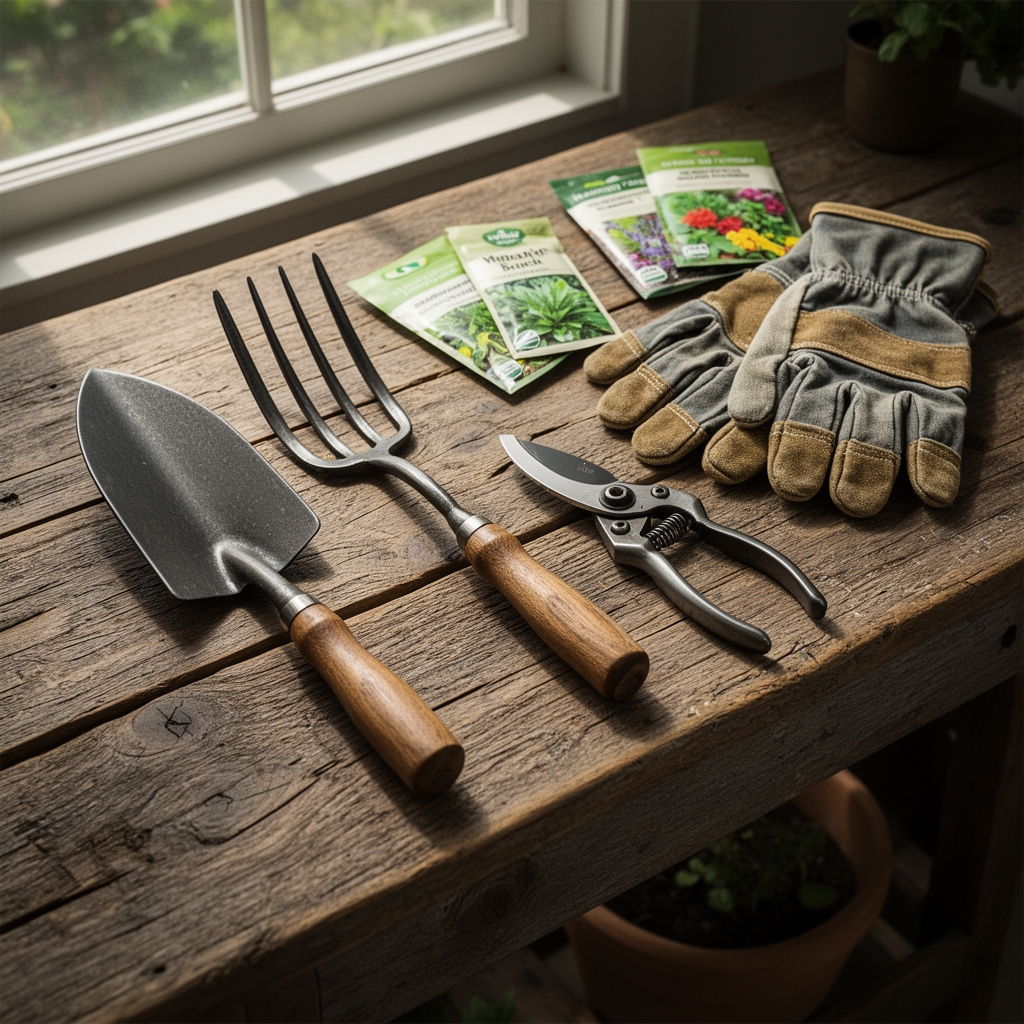
Assemble materials according to your soil's baseline chemistry and texture. Test pH with a calibrated meter before purchasing amendments. Target pH 6.0 to 7.0 for most ornamental perennials and groundcovers. If pH falls below 5.5, incorporate dolomitic limestone at 5 pounds per 100 square feet. If pH exceeds 7.5, add elemental sulfur at 1 pound per 100 square feet and retest after four weeks.
Select a balanced organic fertilizer rated 4-4-4 or 5-5-5 to avoid nitrogen burn during establishment. Avoid synthetic high-nitrogen blends that promote foliage at the expense of root development. Coir or aged compost improves cation exchange capacity in sandy soils. For clay-dominant sites, add coarse horticultural sand and perlite at a 1:1:1 ratio with existing soil to enhance drainage.
Acquire mycorrhizal inoculant powder containing Glomus intraradices and Rhizophagus irregularis. These endomycorrhizae colonize root cortices and extend nutrient uptake range by 10 to 100 times. Pathways require 3/4-minus crushed granite or decomposed granite stabilizer. Edging should be galvanized steel or rot-resistant cedar. Mulch choices include shredded hardwood bark at 2 to 3 inches depth or river stone if aesthetic preference leans minimal.
Timing
Execute site work when soil temperature at 4 inches depth reaches 50 degrees Fahrenheit, typically two weeks before the last spring frost date. In USDA Hardiness Zones 5 and 6, that window opens mid-April. Zones 7 and 8 allow mid-March starts. Zone 9 gardeners can begin in late February.
Install perennials after soil warms to 55 degrees Fahrenheit to encourage rapid root elongation. Late-season installation in Zones 6 and cooler must occur at least six weeks before first frost to allow root establishment before dormancy. Autumn planting in Zones 7 through 10 leverages winter rainfall and cooler evapotranspiration rates.
Avoid working soil when moisture content exceeds field capacity. Squeeze a handful. If it forms a muddy ribbon, wait 48 hours. If it crumbles freely, proceed.
Phases

Sowing the Foundation
Mark the perimeter with stakes and mason line. Remove turf with a flat spade, cutting 2 inches below the root zone. Scrape away thatch to expose mineral soil. Till to 8 inches depth, breaking clods to pea-sized aggregates. Broadcast compost at 2 cubic feet per 100 square feet and incorporate evenly.
Rake level and water to field capacity. Allow 72 hours for settling. Re-level low spots with additional amended soil. Compact pathways with a hand tamper to prevent subsidence under foot traffic.
Pro-Tip: Inoculate planting holes with 1 tablespoon mycorrhizal powder per plant, applied directly to root surfaces before backfilling. Contact between fungal spores and root hairs is mandatory for colonization.
Transplanting Anchor Species
Position evergreen shrubs and ornamental grasses first to establish spatial hierarchy. Dig planting holes twice the root ball width and equal to root ball depth. Loosen roots circling the container perimeter with fingers to redirect growth outward.
Set crown level with surrounding grade. Backfill with native soil and water to eliminate air pockets. Create a 3-inch-high berm at the drip line to direct irrigation toward the root zone during the first growing season.
Space plants according to mature spread. Lavender cultivars require 18 to 24 inches center-to-center. Ornamental grasses like Calamagrostis 'Karl Foerster' need 30 inches. Japanese forest grass (Hakonechloa macra) tolerates 12-inch spacing in partial shade.
Pro-Tip: Prune transplanted shrubs at a 45-degree angle just above outward-facing buds to redirect auxin distribution and promote horizontal branching.
Establishing the Living System
Water transplants with 1 gallon per plant every three days for the first two weeks. Transition to twice weekly for weeks three through six. Deep watering encourages roots to explore lower soil horizons where moisture remains stable.
Apply mulch after the second watering cycle. Keep mulch 2 inches away from plant stems to prevent crown rot. Refresh mulch annually in early spring to maintain 2 to 3 inches depth.
Pro-Tip: Install drip irrigation on a timer set for 0.5 gallons per hour per emitter, running 30 minutes three times weekly during establishment. Adjust based on rainfall accumulation measured with a rain gauge.
Troubleshooting
Symptom: Chlorotic leaves with green veins on newly planted shrubs.
Solution: Iron deficiency induced by high pH. Foliar spray with chelated iron at 1 tablespoon per gallon weekly until new growth emerges green.
Symptom: Wilting despite moist soil and cool temperatures.
Solution: Root rot caused by Phytophthora or Pythium. Remove affected plants, improve drainage with additional coarse sand, and avoid overhead watering.
Symptom: Powdery white coating on lavender foliage.
Solution: Powdery mildew thrives in high humidity and poor air circulation. Space plants wider, prune for airflow, and apply sulfur-based fungicide at label rates.
Symptom: Stunted growth and yellowing despite adequate water.
Solution: Nitrogen deficiency. Side-dress with blood meal (12-0-0) at 1 pound per 100 square feet, watered in immediately.
Maintenance
Water established plants with 1 inch per week during active growth, measured with a rain gauge. Reduce to 0.5 inches weekly during dormancy. Prune lavender after spring bloom, removing one-third of stem length to prevent woodiness. Cut ornamental grasses to 4 inches above crown in late winter before new shoots emerge.
Fertilize annually in early spring with 4-4-4 organic blend at 2 pounds per 100 square feet. Reapply mycorrhizal inoculant every three years by working powder into the top 2 inches of soil at the drip line.
FAQ
When is the best time to start site preparation?
Begin six weeks before your region's last spring frost date when soil temperature reaches 50 degrees Fahrenheit at 4 inches depth.
What soil pH supports the widest plant palette?
pH 6.5 to 7.0 accommodates lavender, salvia, ornamental grasses, and most groundcovers without requiring pH-specific amendments.
How do I prevent weeds without herbicides?
Maintain 3 inches of organic mulch and install landscape fabric beneath pathways. Hand-pull weeds weekly during the first season.
Can I use native soil without amendments?
Only if texture is loamy and pH tests between 6.0 and 7.0. Clay or sand-dominant soils require compost and drainage amendments for healthy root development.
How long until the meditation corner is self-sustaining?
Most perennial installations reach low-maintenance status after two full growing seasons, once root systems extend beyond the original planting holes.